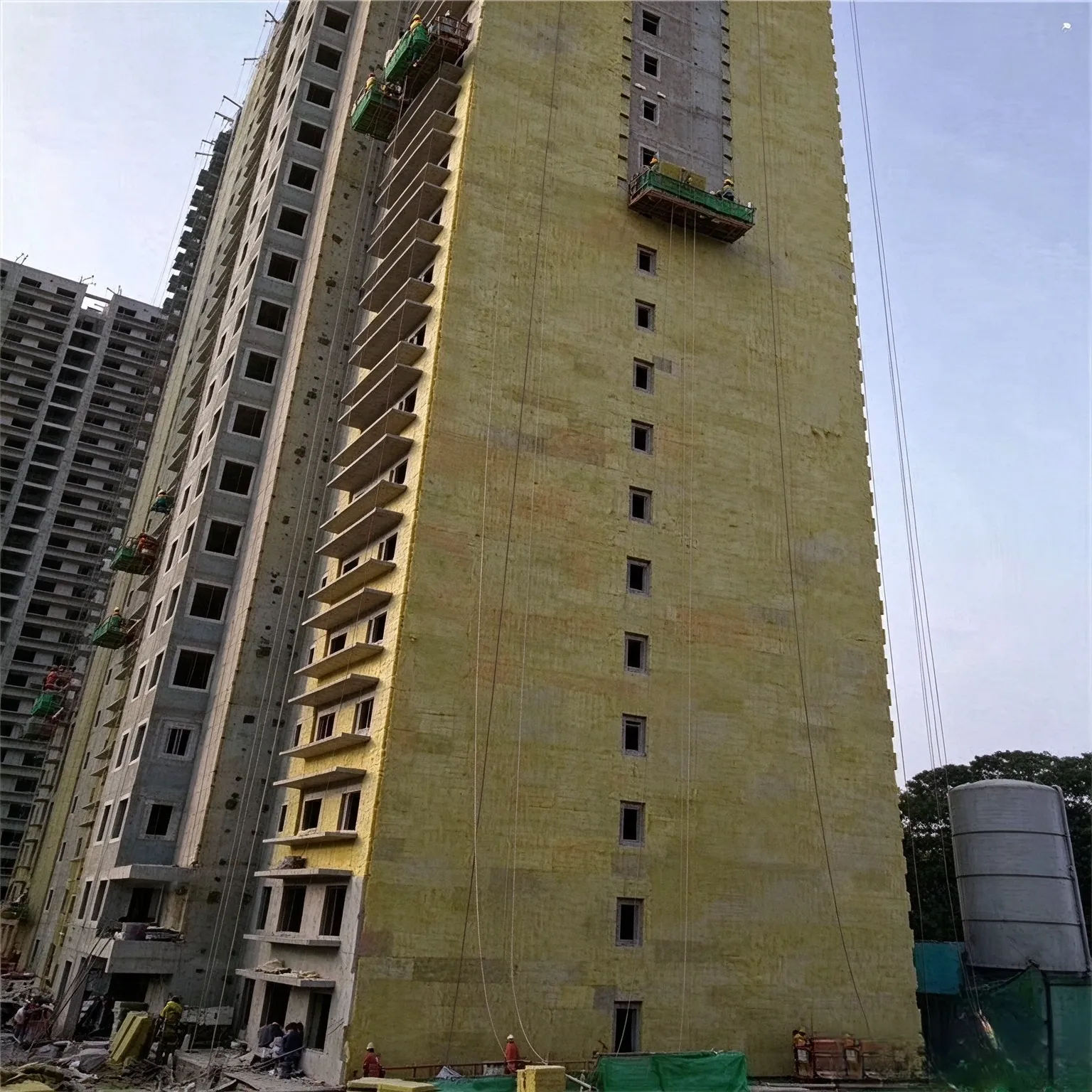
Building energy efficiency
Relying on the low thermal conductivity rock wool insulation layer, it blocks heat and cold transfer, reduces building heating and ventilation energy consumption, provides long-term stable insulation, and aids in building energy-saving renovation and low-carbon operation.
Heat loss through the building envelope is the primary source of building energy consumption, and the selection of high-performance rock wool insulation products is a core solution for enhancing building energy efficiency. Our rock wool products are made from natural basalt ore, melted at high temperatures and centrifugally spun into fibers. They possess an extremely low thermal conductivity coefficient and can form a continuous and stable thermal insulation layer on walls, roofs, curtain walls, basement ceilings, and other locations. It can effectively block the conduction of hot and cold air between the inside and outside of the building. In summer, it prevents outdoor heat from entering the interior, reducing the cooling load on air conditioning systems; in winter, it traps indoor heat, reducing energy consumption of heating equipment.
Rock wool fiber has a stable structure, making it resistant to shrinkage, settlement, and deformation under long-term alternating temperature and humidity conditions, ensuring that its thermal insulation performance does not degrade rapidly. The material meets the required compressive strength, adapting to various construction systems such as external wall insulation and roof insulation, and is compatible with various finishing materials. The use of rock wool insulation system can effectively reduce energy costs throughout the building’s lifecycle, helping new buildings and old renovation projects meet national energy-saving standards and achieve low-carbon building operations.